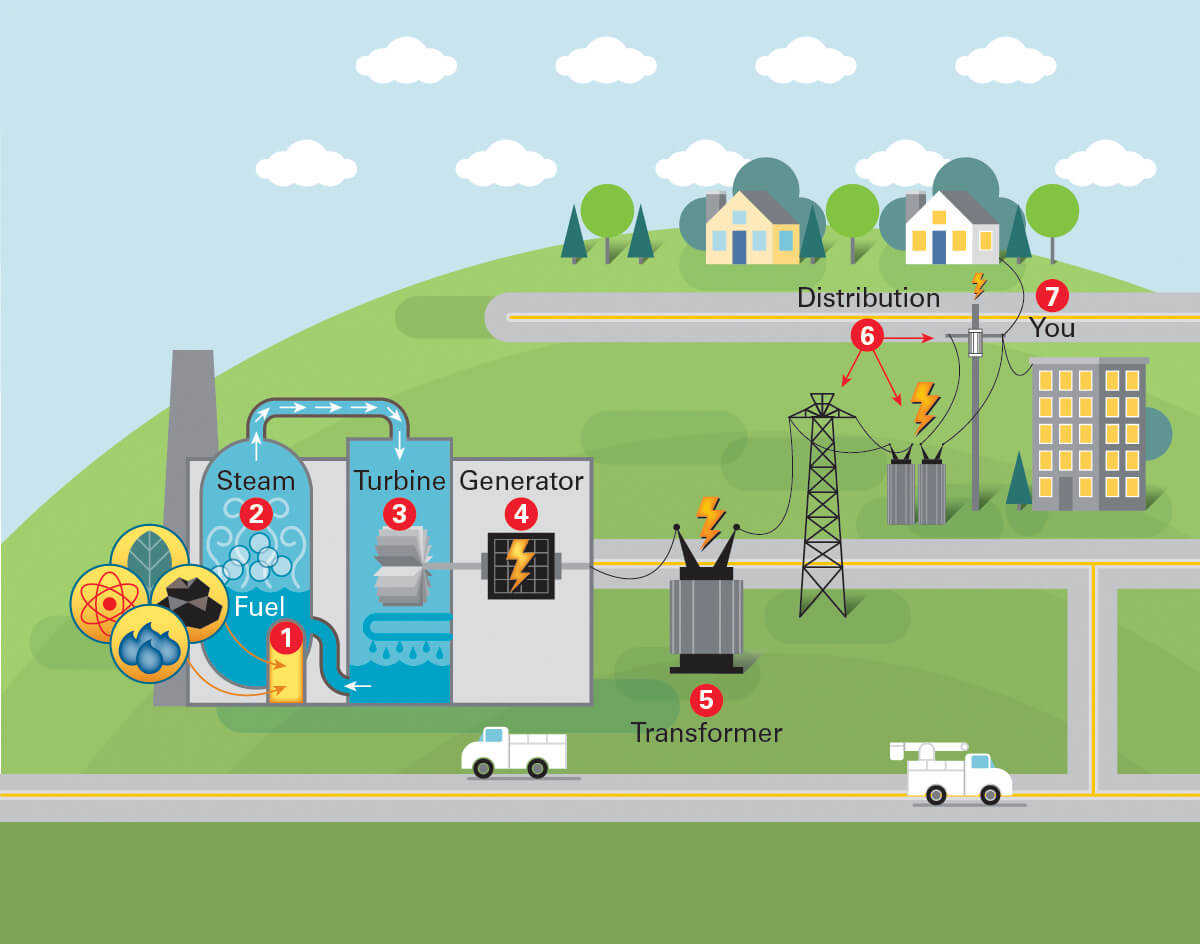
Biomass can be converted into usable energy through various processes. The most common methods include:
Combustion
This is the most straightforward method, where biomass is burned in a controlled environment to produce heat. This heat generates steam, which drives turbines connected to generators to produce electricity. Biomass combustion can be done in dedicated power plants or even in boilers for residential heating.
Gasification
In this process, biomass is heated in a low-oxygen environment to produce a gas mixture known as syngas. Syngas primarily contains carbon monoxide, hydrogen, and methane, which can be used to generate electricity, fuel engines, or produce chemicals.
Anaerobic Digestion
Organic waste materials, such as food scraps, manure, and sewage sludge, are broken down by microorganisms in the absence of oxygen. This results in the production of biogas, primarily composed of methane, which can be burned to generate electricity or heat.
Pyrolysis
This method involves heating biomass in the absence of oxygen at high temperatures. The process results in the production of bio-oil, syngas, and biochar. Bio-oil can be further refined into transportation fuels, while biochar is used as a soil amendment